
August 23, 2026
When Wood Becomes Home
A story about reclaimed wood, Bulgarian traditions, and the quiet joy of making a home.
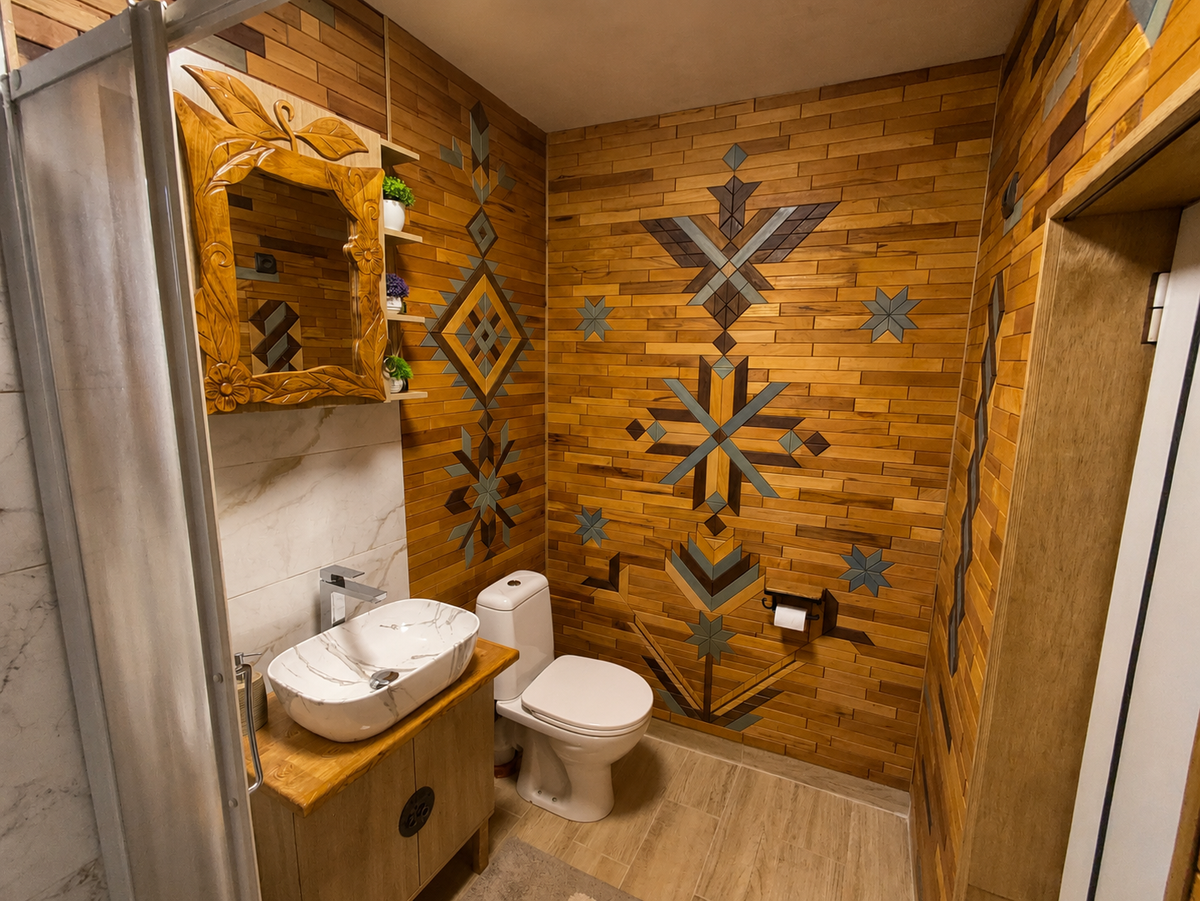
This isn't a story about perfect interior design.
It is a story about making a home.
Our home.
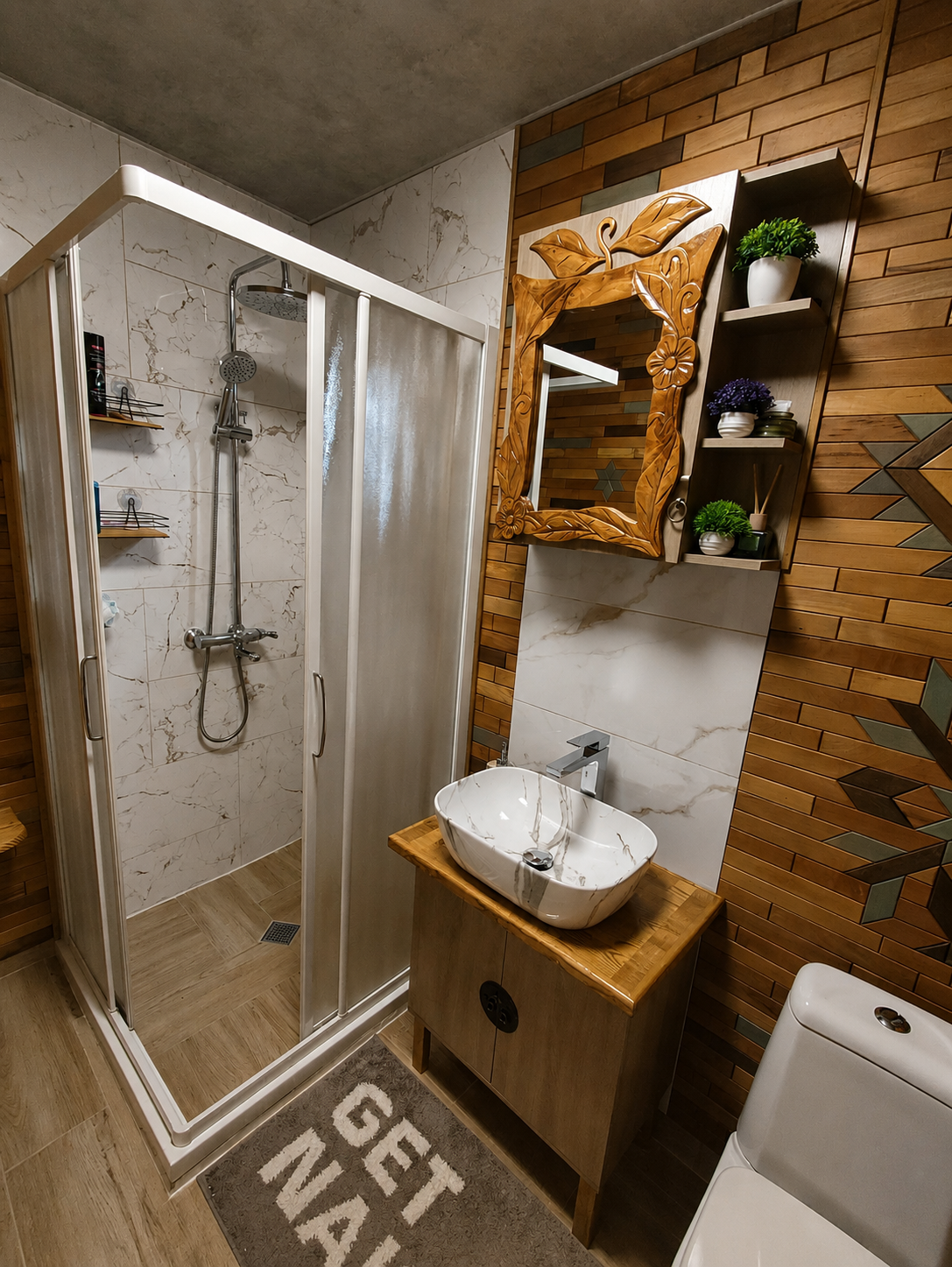
This bathroom doesn't pretend to be the latest design trend, nor is it a lesson in how bathrooms should be built.
Looking back, there are things we would probably do differently. Today we know that designing the entire room before building the first wall would have made some decisions easier.
But there was one problem.
We had never seen anything quite like this in real life.
There was nothing to copy.
No reference photos.
No existing project we could simply follow.
So we built it the only way we knew how.
One wall at a time.
Every completed wall changed the next decision.
Sometimes we simplified.
Sometimes we abandoned ideas we had loved only days before.
Little by little, we began to understand what worked and what didn't.
And perhaps that's exactly why it feels so personal today.
A Second Life, Sixty Years Later
Sometimes beautiful projects begin with something that most people would throw away.
Friends of ours were replacing the old beech parquet flooring in their home.
Instead of throwing it away, they gave it to us.
Among the old wooden blocks, one detail immediately caught our attention.
A factory stamp.
1960.
More than sixty years before becoming part of our bathroom, this small piece of beech had already lived an entire lifetime beneath someone else's feet.
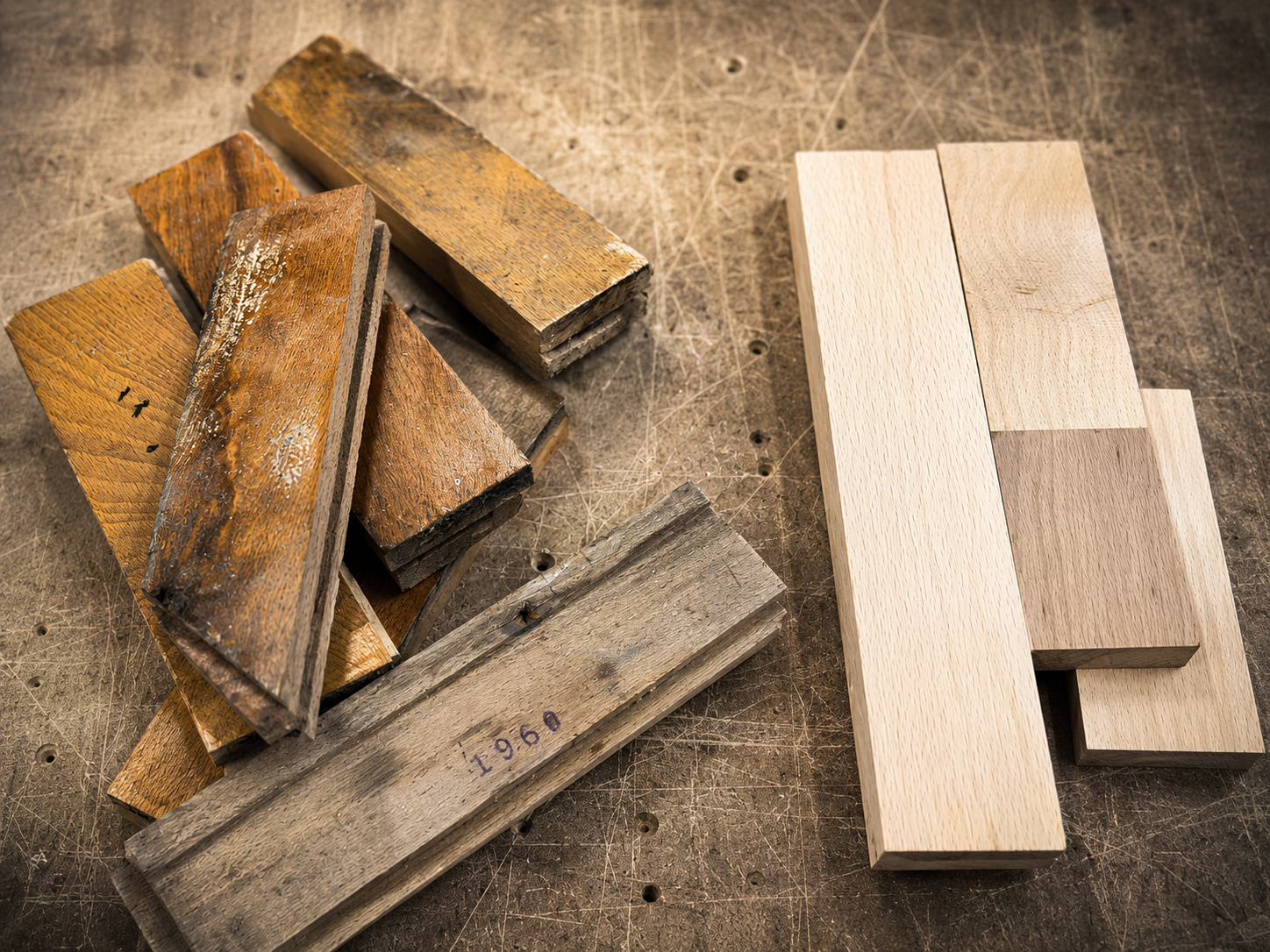
Before we could use it, every single piece had to be cleaned and prepared by hand.
Cleaning.
Straightening.
Cutting.
Sanding.
Sorting.
Our workshop is built for creating artworks—not processing thousands of parquet blocks—so every single piece travelled through several machines before finally revealing the beautiful beech hidden underneath.
Originally we planned to stain everything in different colours.
But once we started sanding it, we changed our minds.
The beech revealed an incredible variety of natural tones already hidden inside the wood.
Warm honey.
Soft amber.
Golden brown.
Occasional darker streaks.
Every piece was unique.
Instead of covering that beauty, we decided to preserve it.
Almost every block received nothing more than clear linseed oil.
Only a few carefully selected pieces were finished in walnut or muted blue to create gentle accents throughout the room.
The First Wall
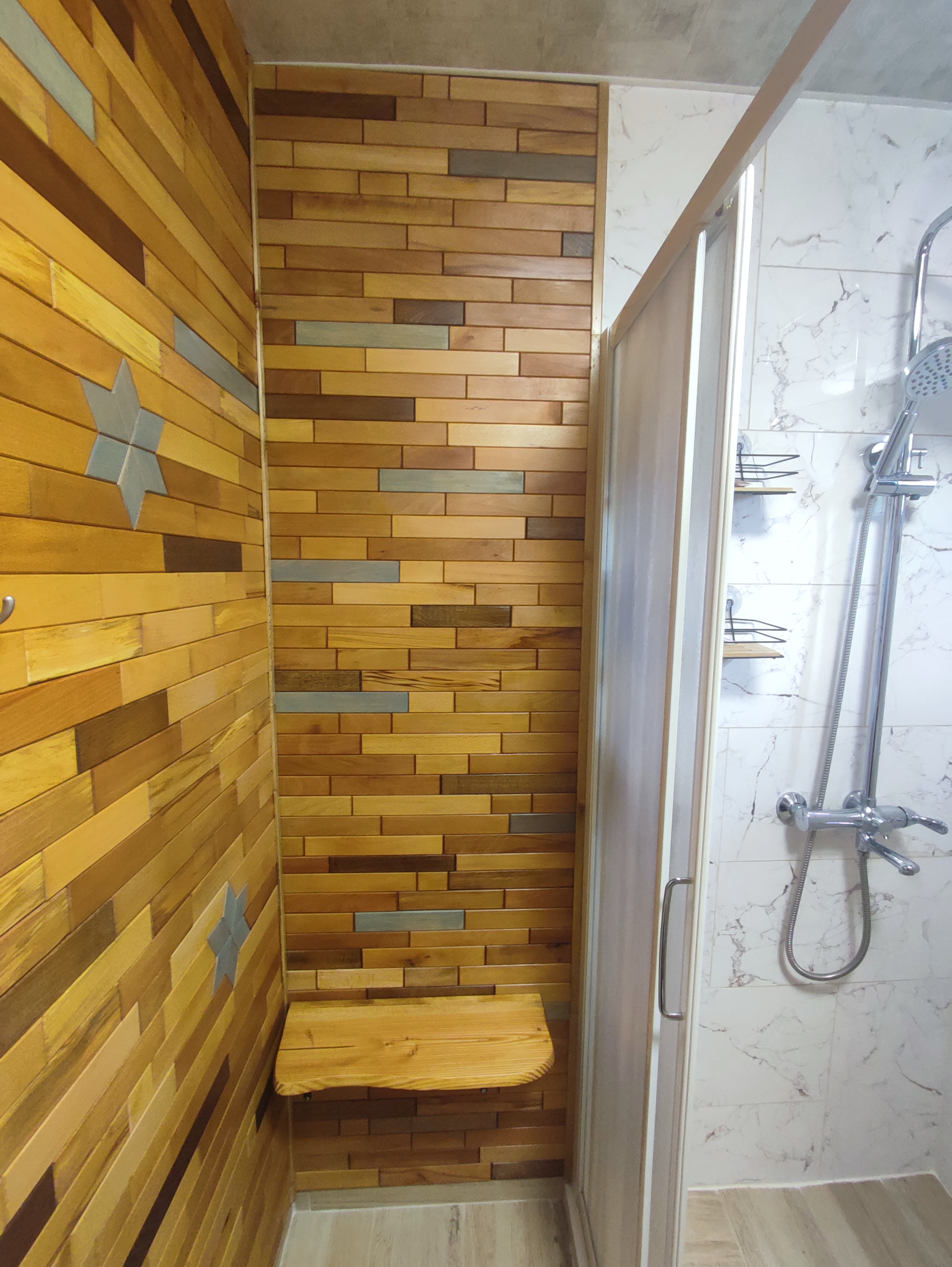
Before covering the entire bathroom, we decided to make just one experimental wall beside the shower.
Nothing complicated.
Just a simple brick-like pattern.
We wanted to answer one question.
Would reclaimed beech actually work inside this room?
As soon as we finished that first wall, we knew we wanted to continue.
The room immediately felt warmer and somehow much more welcoming.
More Than Decoration
As the next walls slowly emerged, we began thinking about something beyond aesthetics.
Both of us have always loved traditional Bulgarian embroidery.
Not simply because it is beautiful.
But because every motif carries meaning.
For centuries, Bulgarian women embroidered symbols of health, protection, prosperity, harmony, fertility and family happiness into the clothes they made for the people they loved.
There is even a beautiful Bulgarian tradition called narichane.
While embroidering, women would quietly place their hopes, prayers and blessings into every stitch.
The embroidery became far more than decoration.
It became a silent wish for the future.
We loved that idea.
Our wooden motifs could never replace those traditions.
But in our own way, they became our version of narichane.
As we shaped every wooden element, we found ourselves thinking about exactly the same things.
Health.
Peace.
A happy family.
A welcoming home.
One day we'll dedicate a separate article to the beautiful language hidden inside Bulgarian embroidery.
It deserves a story of its own.
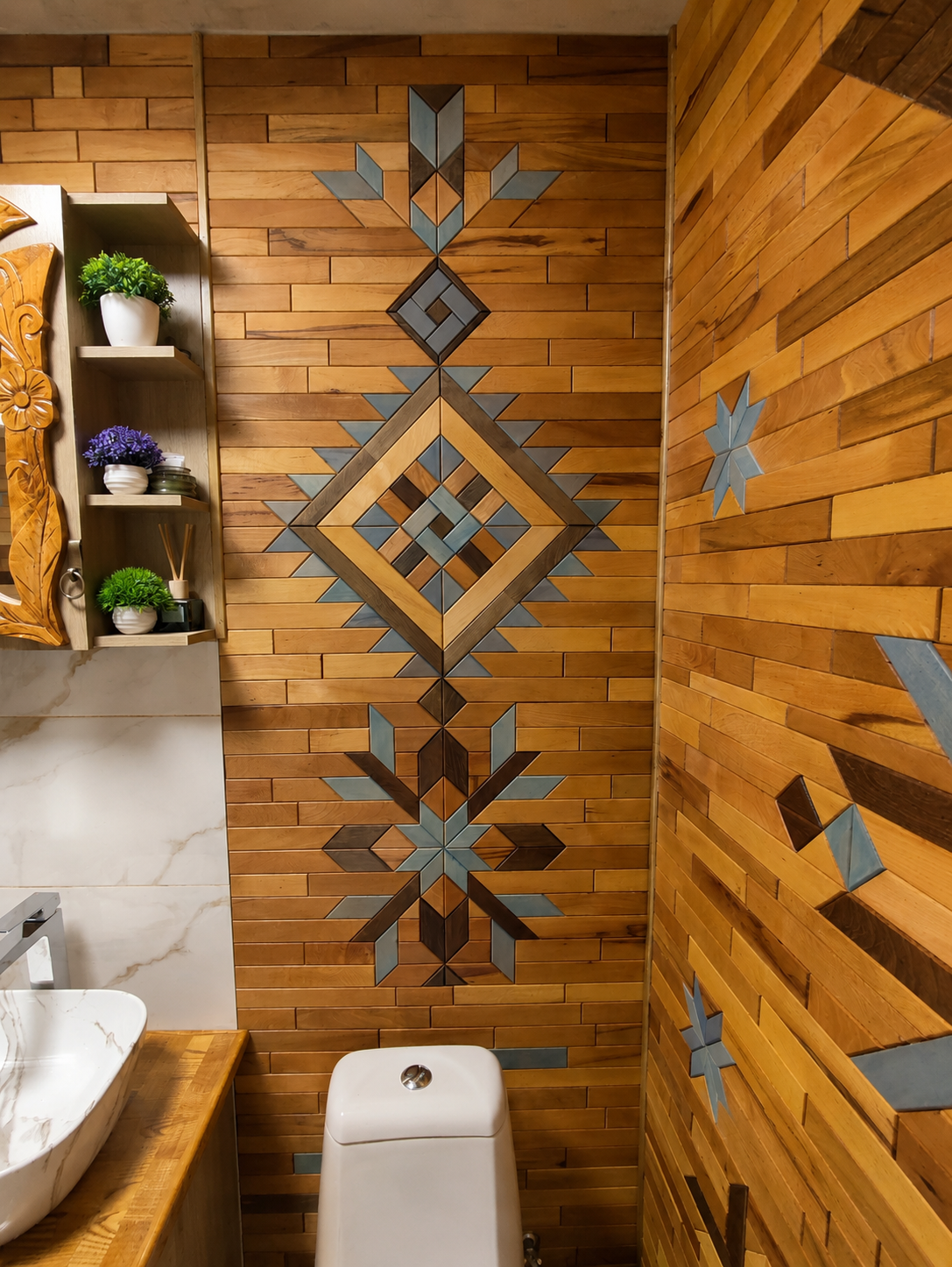
This was also the stage when ChatGPT quietly joined the project.
Together we explored many possible compositions inspired by traditional Bulgarian embroidery.
Some were inspired by Chiprovtsi carpets.
Others by regional embroidery motifs.
Eventually we selected, simplified and adapted every design by hand until it felt right for this particular room.
The computer generated possibilities.
Our hands turned them into wood.
Learning When to Stop
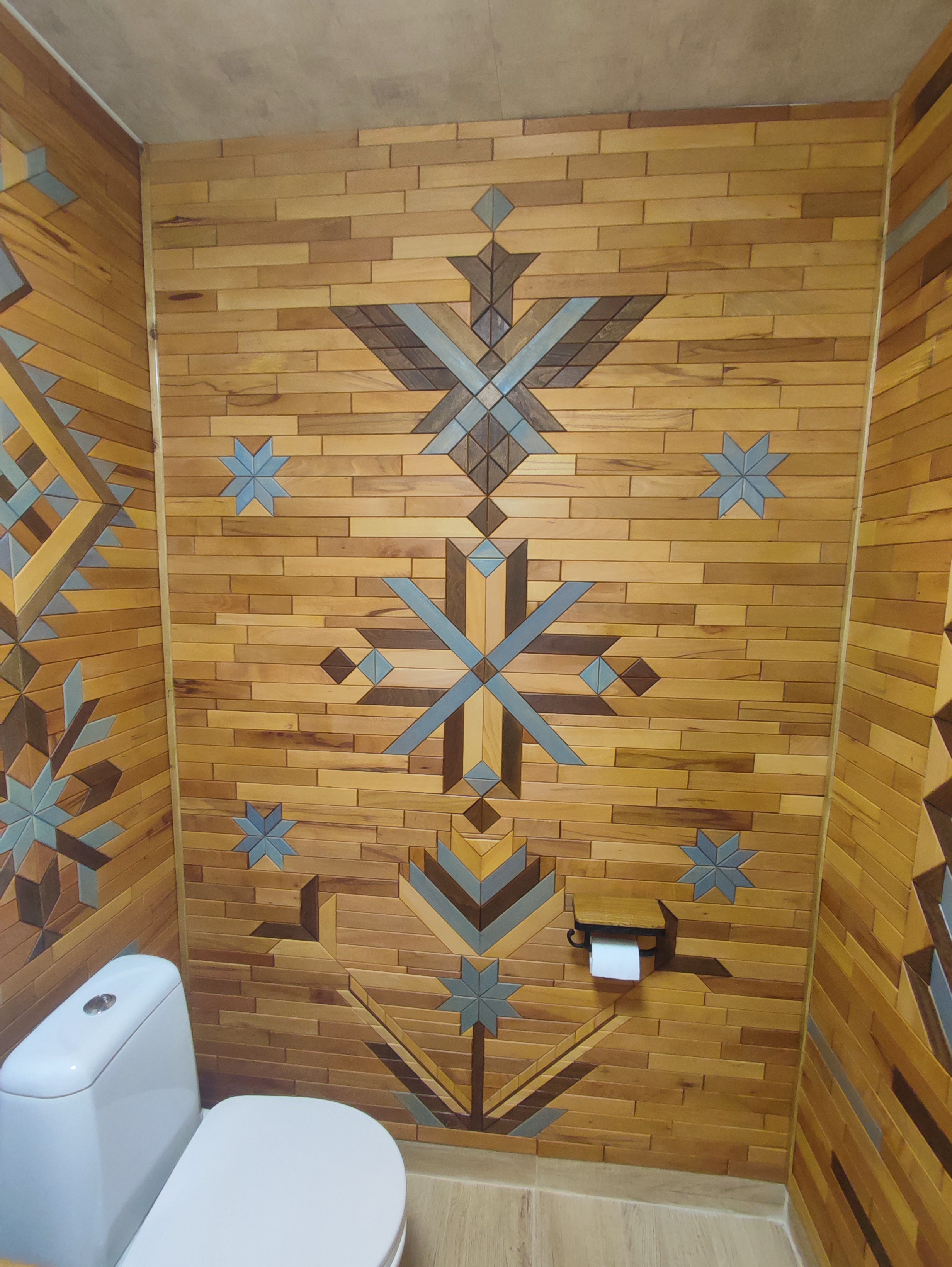
The largest wall became the centrepiece of the bathroom.
When it was finished, we stepped back.
It was beautiful.
Rich.
Full of detail.
Perhaps...
Too rich.
That realization changed everything.
Instead of making the last wall equally decorative, we deliberately made it quieter.
Sometimes good design isn't about adding another idea.
Sometimes it is about recognising the exact moment when enough is enough.
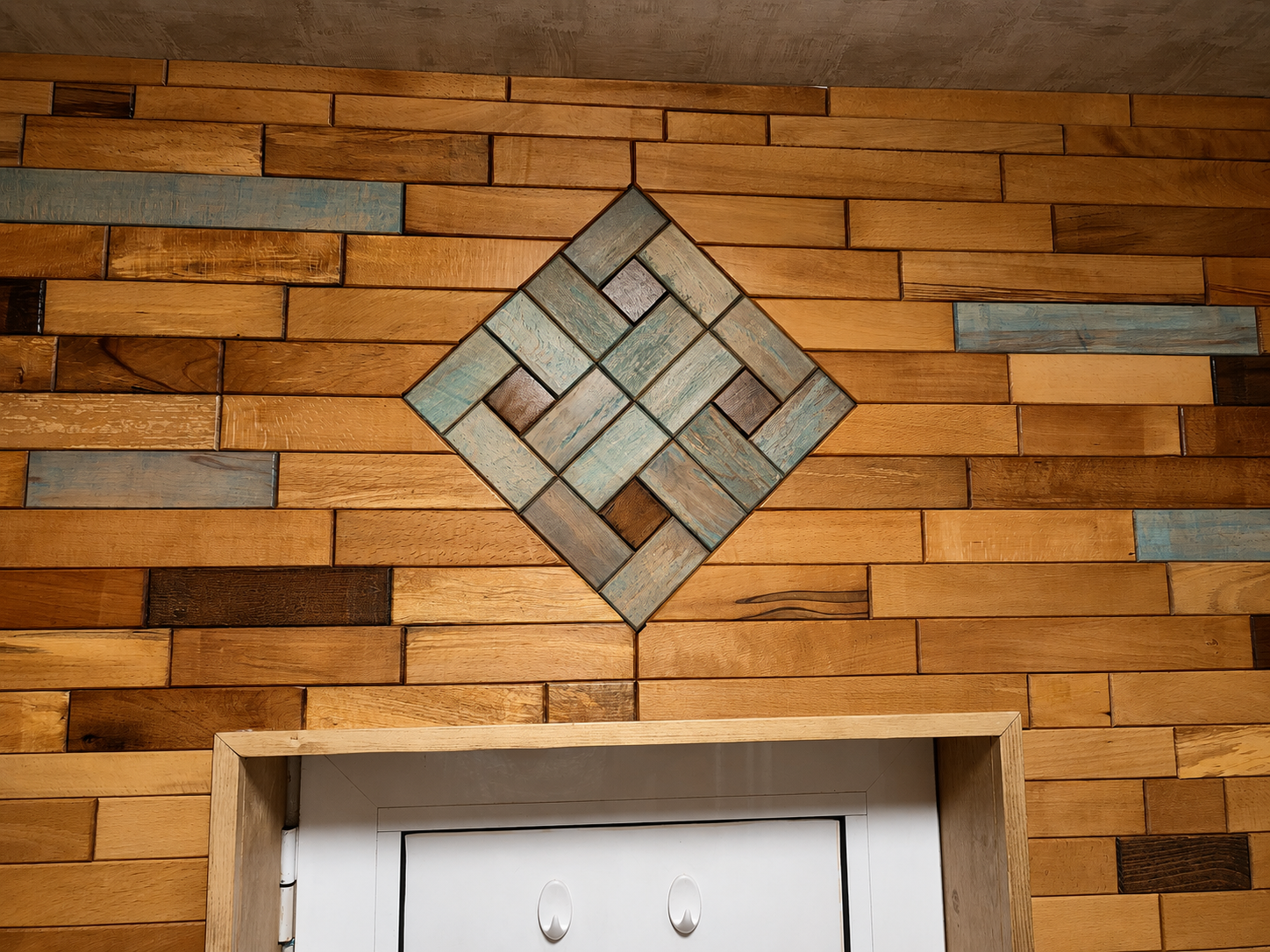
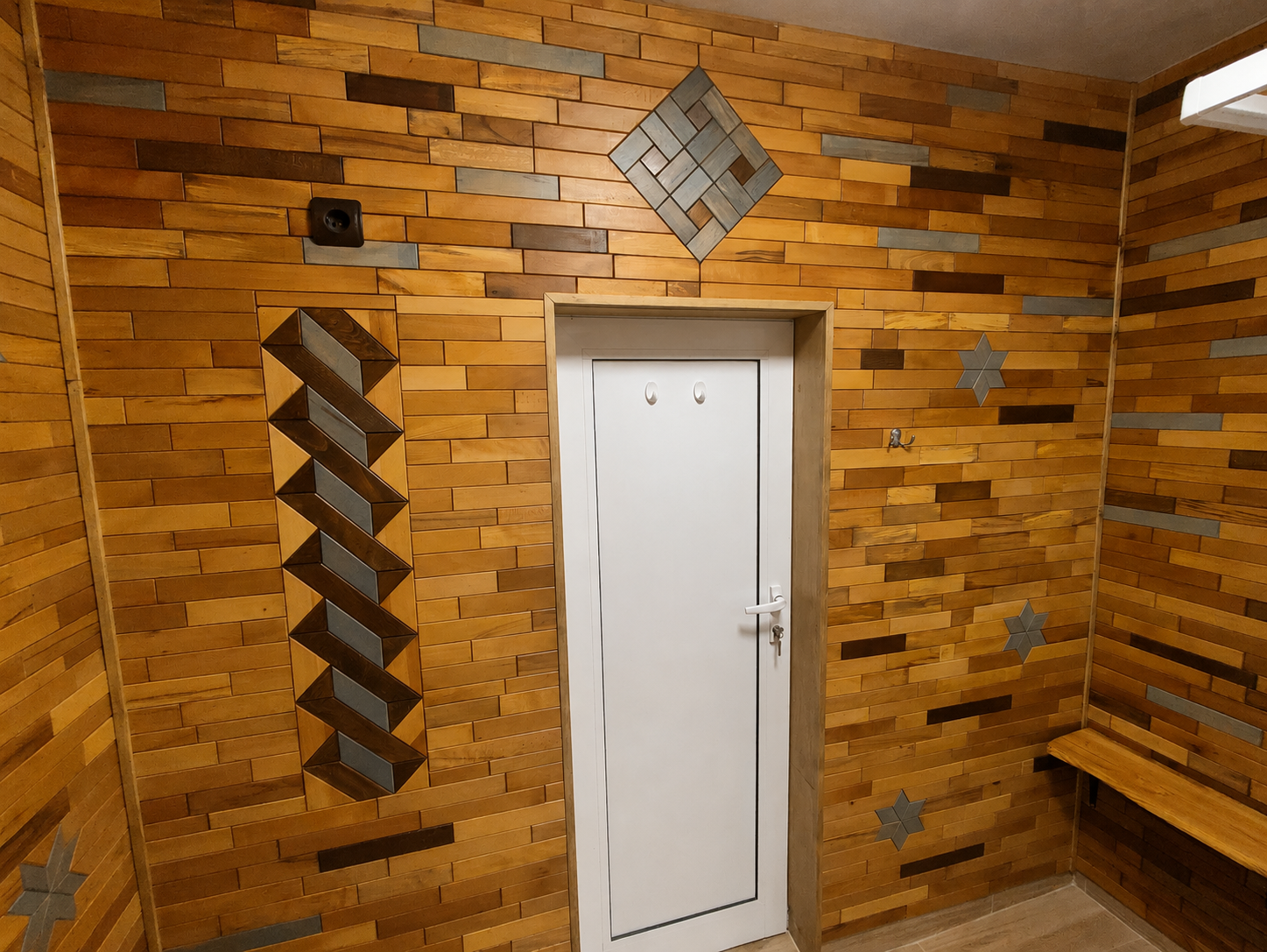
The final wall became a place for the room to breathe.
A simple spiral.
Three stars.
And above the door, a traditional ornament from the famous woodcarving school of Tryavna, known as the Tryavna Shasharma.
Two mirrored forms turning in opposite directions. Two pairs in our case.
Many Bulgarian woodcarvers see them as complementary forces balancing one another—an idea that reminds us of the universal search for harmony found in many cultures around the world.
It felt like the perfect symbol to place above the entrance.
The Broken Mirror
Some of our favourite ideas were never planned.
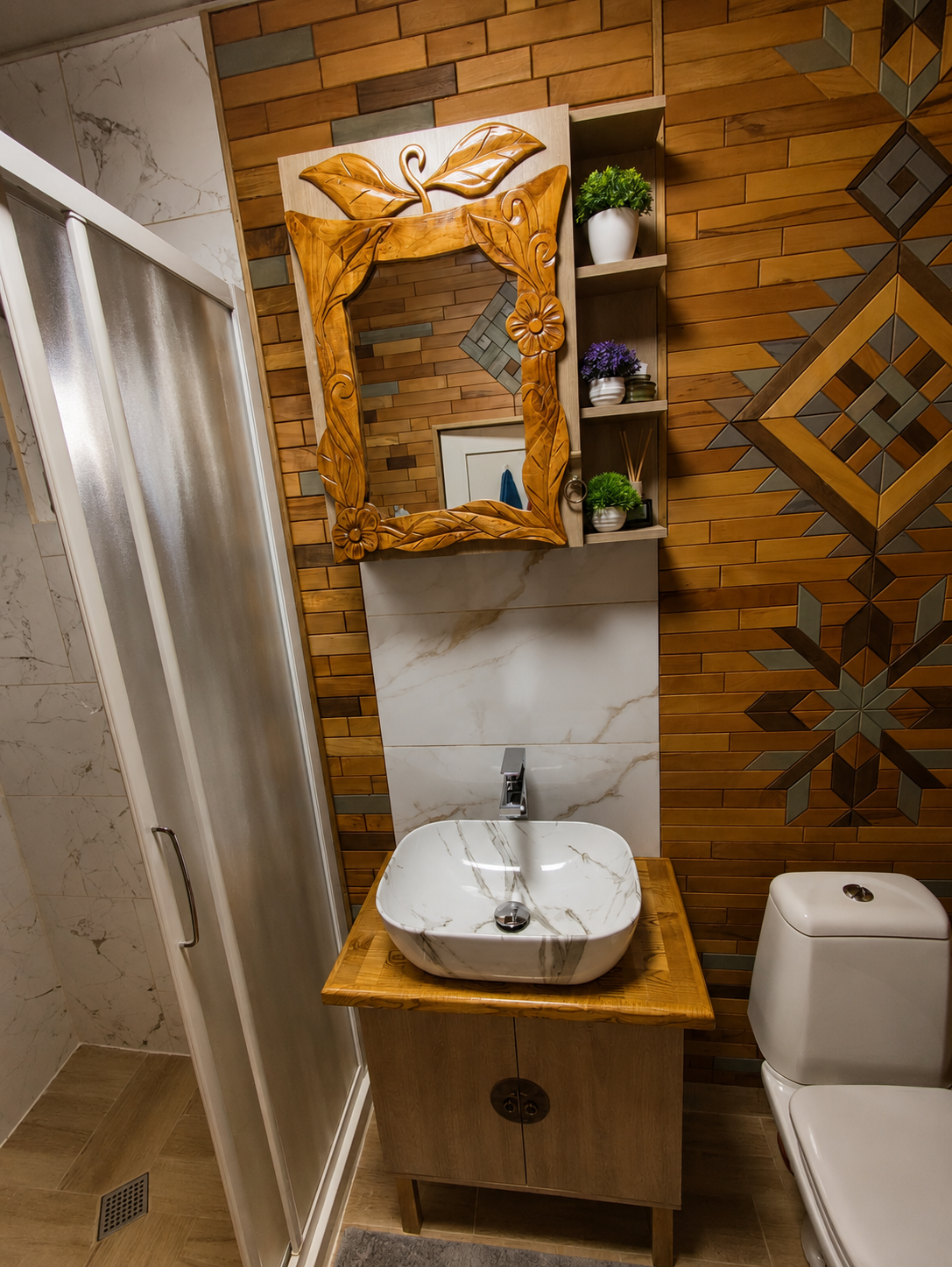
Originally, we bought an ordinary bathroom cabinet.
While installing it, we accidentally broke the mirror.
For a moment it felt like a disaster.
Then we noticed another mirror we already owned.
It was smaller.
Instead of replacing it, Victoria suggested carving a wooden frame around it.
That single accident transformed an ordinary cabinet into one of the most personal pieces in the room.
To complete the composition, we built a solid ash countertop beneath the basin and protected it with marine varnish so it could withstand everyday life while preserving the warmth of real wood.
Sometimes mistakes become better ideas.
More Than a Bathroom
Looking back now, we rarely think about the months of sanding.
Or the dust.
Or the endless stacks of parquet waiting to be restored.
We remember the conversations.
The experiments.
The moments when the wood quietly changed our plans.
This room was never meant to become part of MossArtum.
Yet somehow it reflects our philosophy better than many of the artworks we have created.
Working slowly.
Respecting the material.
Allowing ideas to evolve.
Listening when the wood suggests a better solution.
Perhaps that is why this little countryside bathroom means so much to us.
It reminds us that craftsmanship doesn't begin when a customer places an order.
It begins much earlier.
It begins the moment you decide that even the smallest corner of your own home deserves the same care as the work you create for someone else.
A Small Note
Several of the geometric compositions in this room were developed through long conversations with ChatGPT.
Together we explored dozens of variations inspired by Bulgarian embroidery before selecting and adapting the final motifs by hand.
Like every good tool, AI never replaced craftsmanship.
It simply became another pencil on the workbench.