
July 27, 2026
The Space Between Two Swords
Some commissions begin with a sketch. This one began with a conversation.
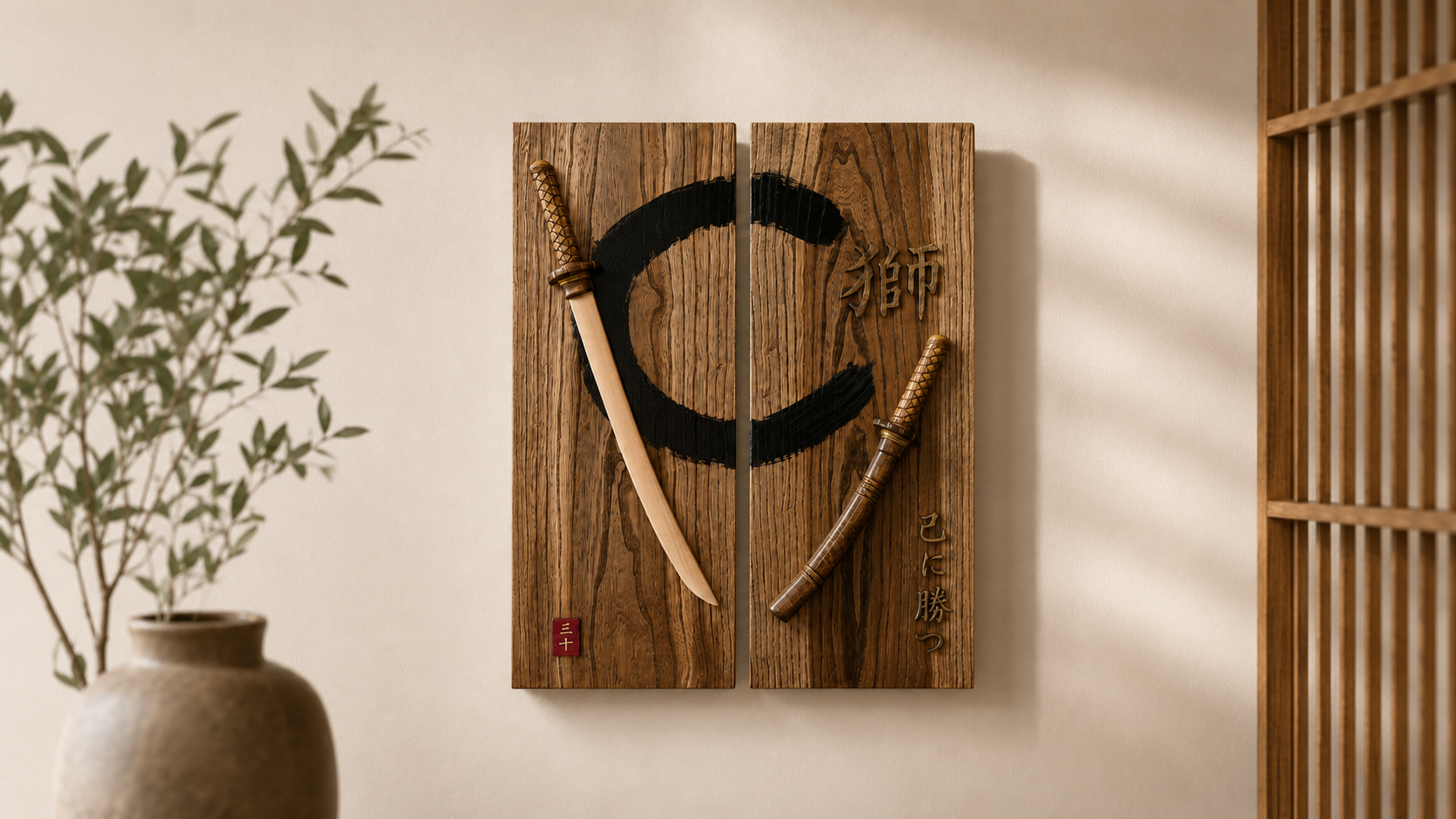
Commission at a glance
Created for: 30th Birthday Gift
Inspiration: Japanese aesthetics & Zen philosophy
Materials: Elm, walnut, linden, laser-cut walnut details
Dimensions: 2 × 21.5 × 54 cm
Techniques: Wood carving, intarsia, laser-cut
Designed: 2026
Made in: MossArtum Studio, Bulgaria
A client contacted us with a simple request: he wanted a truly personal gift for a close friend who was about to celebrate his 30th birthday.
Whenever someone commissions a bespoke artwork from us, we never begin by asking what it should look like. Instead, we ask about the person who will receive it.
What inspires them?
What do they enjoy?
What kind of person are they?
As we talked, a clear picture began to emerge. The birthday celebrant was deeply fascinated by Japanese culture. He studied Japanese language at university, practiced Japanese sword martial arts, and was strongly drawn to Zen philosophy.
At that moment we knew that we weren't simply designing a decorative wall piece.
We were creating a portrait without using a portrait.
Looking for Meaning
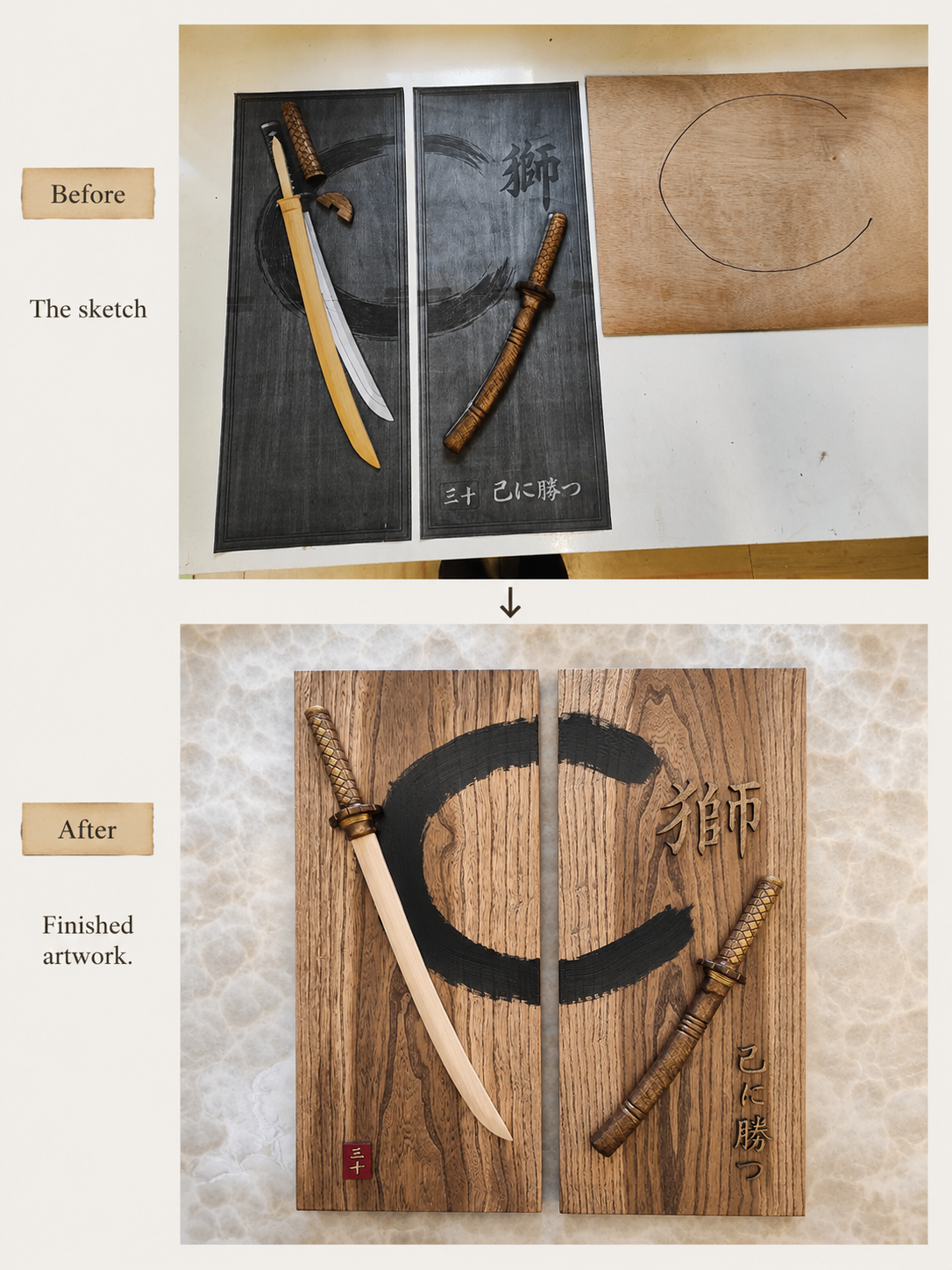
Before drawing a single line, we immersed ourselves in the world that had inspired him for years.
We explored Zen philosophy, Japanese aesthetics, the symbolism of martial arts, and the visual language that has shaped Japanese art for centuries. Modern AI tools helped us organize information and understand unfamiliar concepts more efficiently, but every artistic decision, every composition, and every detail remained entirely our own.
Our goal wasn't to create something that merely looked Japanese.
We wanted to create something that someone who truly appreciated Japanese culture would immediately recognize as respectful, thoughtful, and authentic.
Gradually, the essential elements revealed themselves.
- 30 (三十) — celebrating an important milestone.
- The Lion (獅) — representing his zodiac sign.
- Two Japanese swords — reflecting his passion for martial arts.
- The phrase "Conquer Yourself" (己に勝つ) — expressing a philosophy of personal growth rather than victory over others.
- The Enso circle — symbolizing presence, balance, and the beauty of imperfection.
None of these elements were chosen simply because they looked beautiful.
Each one told part of the story.
The Moment Everything Changed
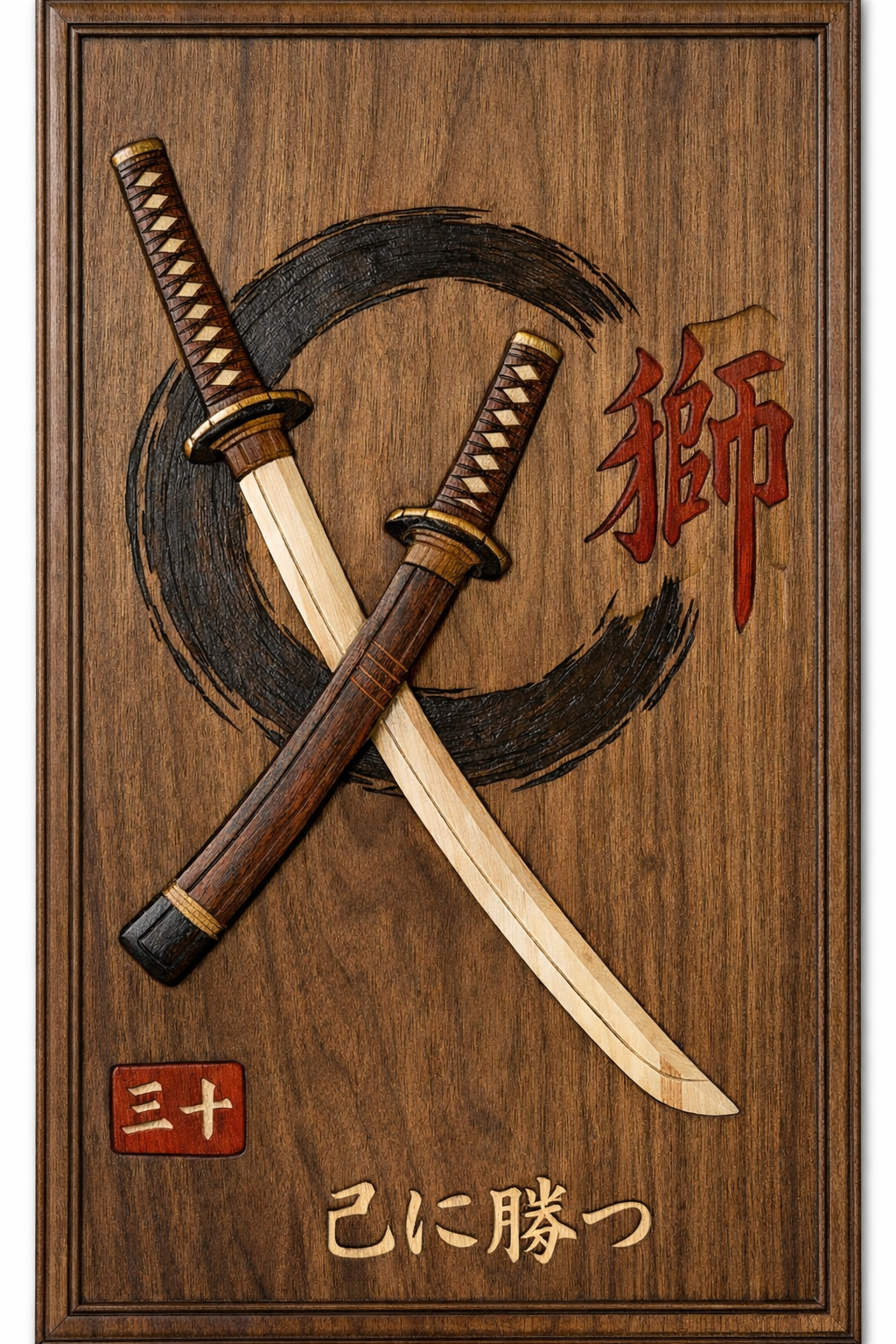
Our first idea was fairly traditional.
A single walnut board.
A frame.
Two crossed swords.
It looked good.
But something didn't feel right.
The more we learned about Zen, the more we realized that the crossed swords created tension where we were actually searching for calm.
That realization completely changed the direction of the project.
Instead of forcing both swords into one composition, we separated them into two independent panels.
Between them appeared something invisible, yet deeply meaningful.
Ma (間).
In Japanese aesthetics, Ma is often described as the meaningful space between things.
It is not empty space.
It is space that allows every element to breathe.
The swords no longer competed with one another.
Instead, they entered into a quiet conversation across the space that separated them.
Ironically, what wasn't carved became just as important as what was.
Choosing the Right Wood
With the composition finalized, it was time to select the materials.
Our original plan was to use walnut.
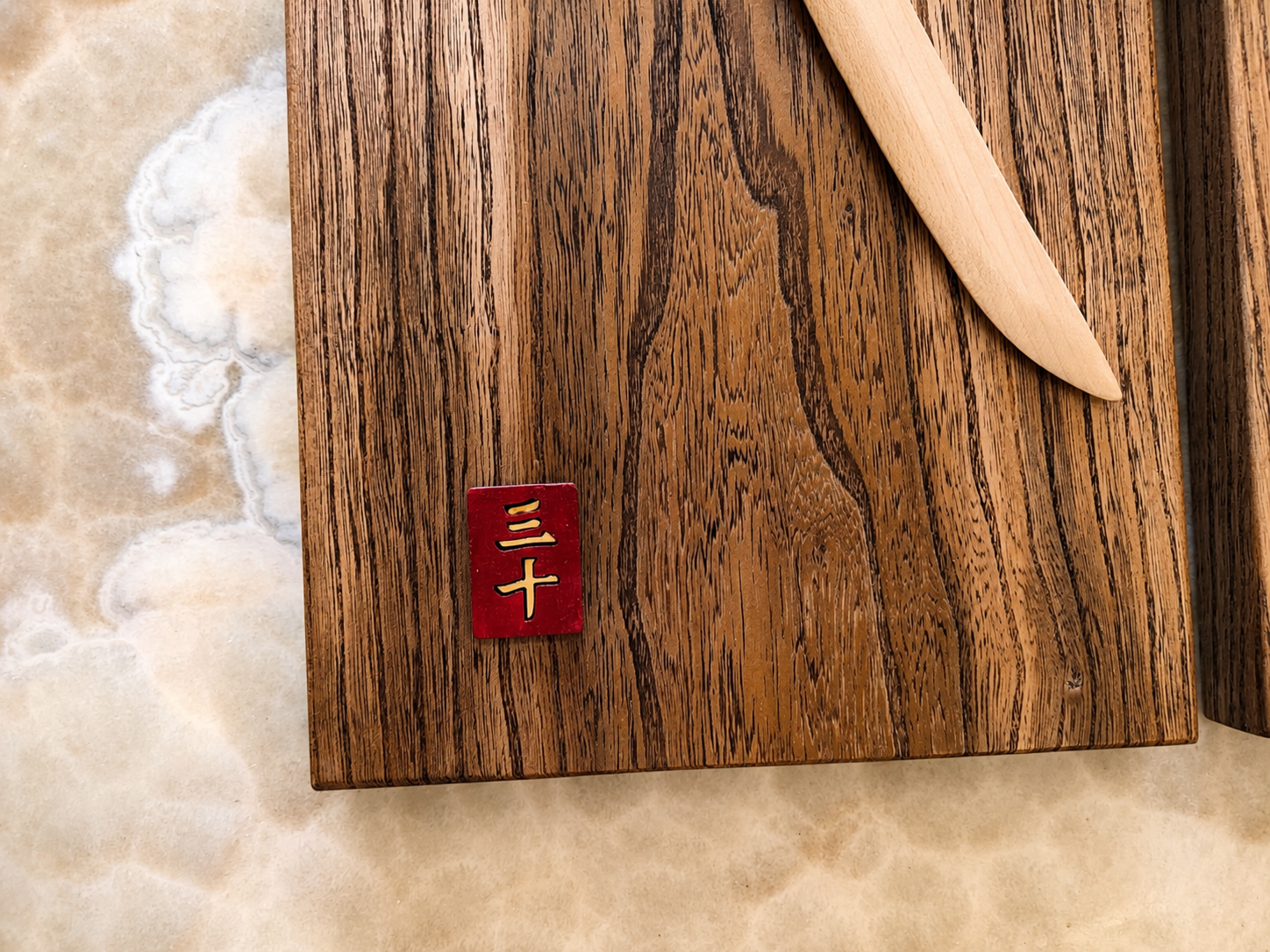
While searching through our stock, however, two forgotten elm boards caught our attention.
Their grain had a quiet movement that immediately felt right for this project.
Sometimes wood simply tells you where it belongs.
After applying the first coat of oil, the grain came alive with remarkable depth and character.
At that moment, there was no longer any doubt.
The elm had found its purpose.
Making a Wooden Sword
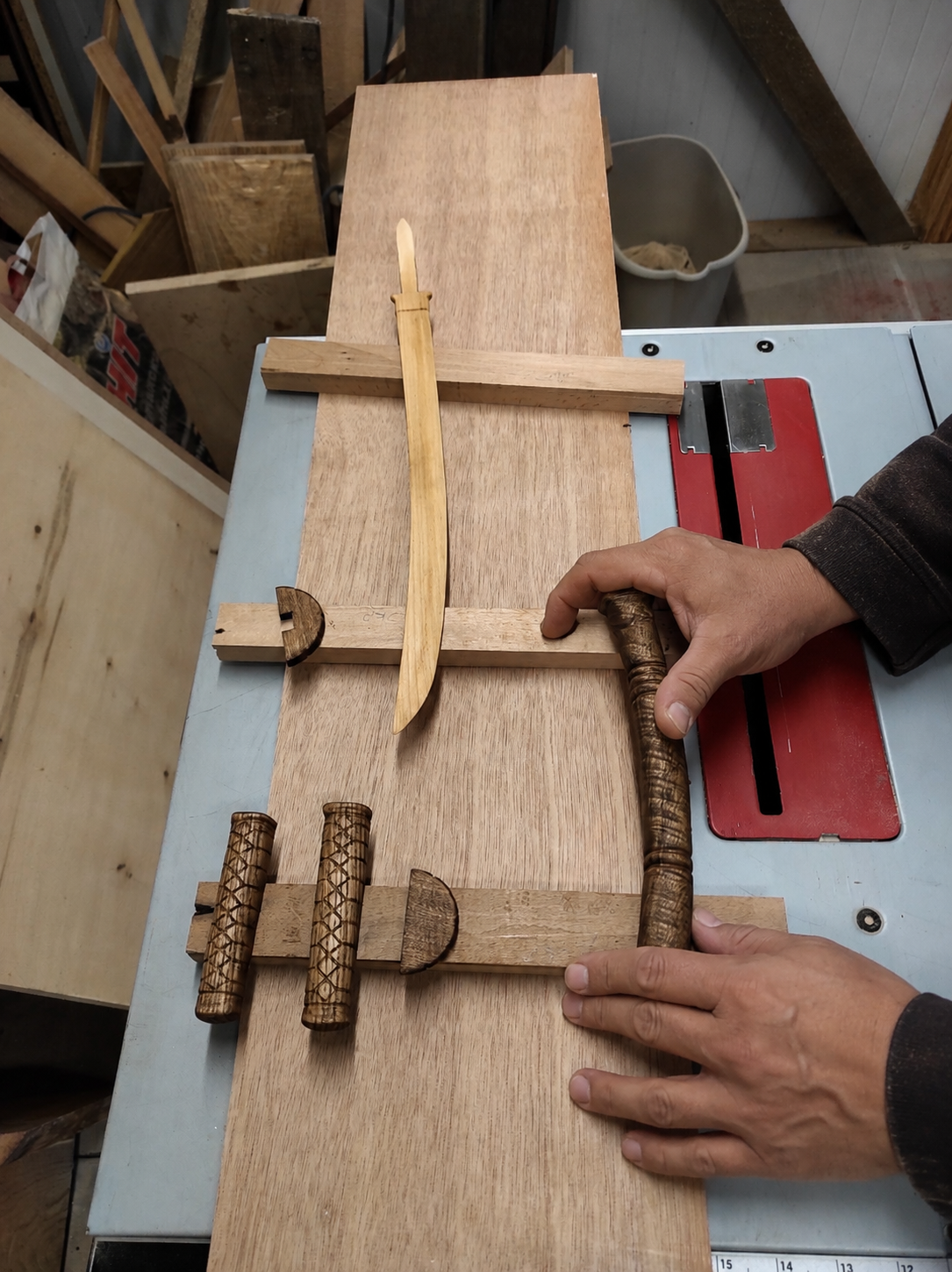
One of the details that mattered most to us was the katana itself.
Although it would be carved from wood rather than forged from steel, we wanted to approach its creation with the same respect shown in traditional sword making.
For the blade, we chose linden wood because of its naturally light color.
The process followed the same logical sequence used by traditional swordsmiths.
First, the blank was prepared.
Then the blade profile was shaped.
Only after that came the careful sharpening of its form, followed by fitting the handle.
No one looking at the finished artwork would ever know how much attention went into this single element.
But we would.
And that was reason enough.
The Last Quiet Conversation
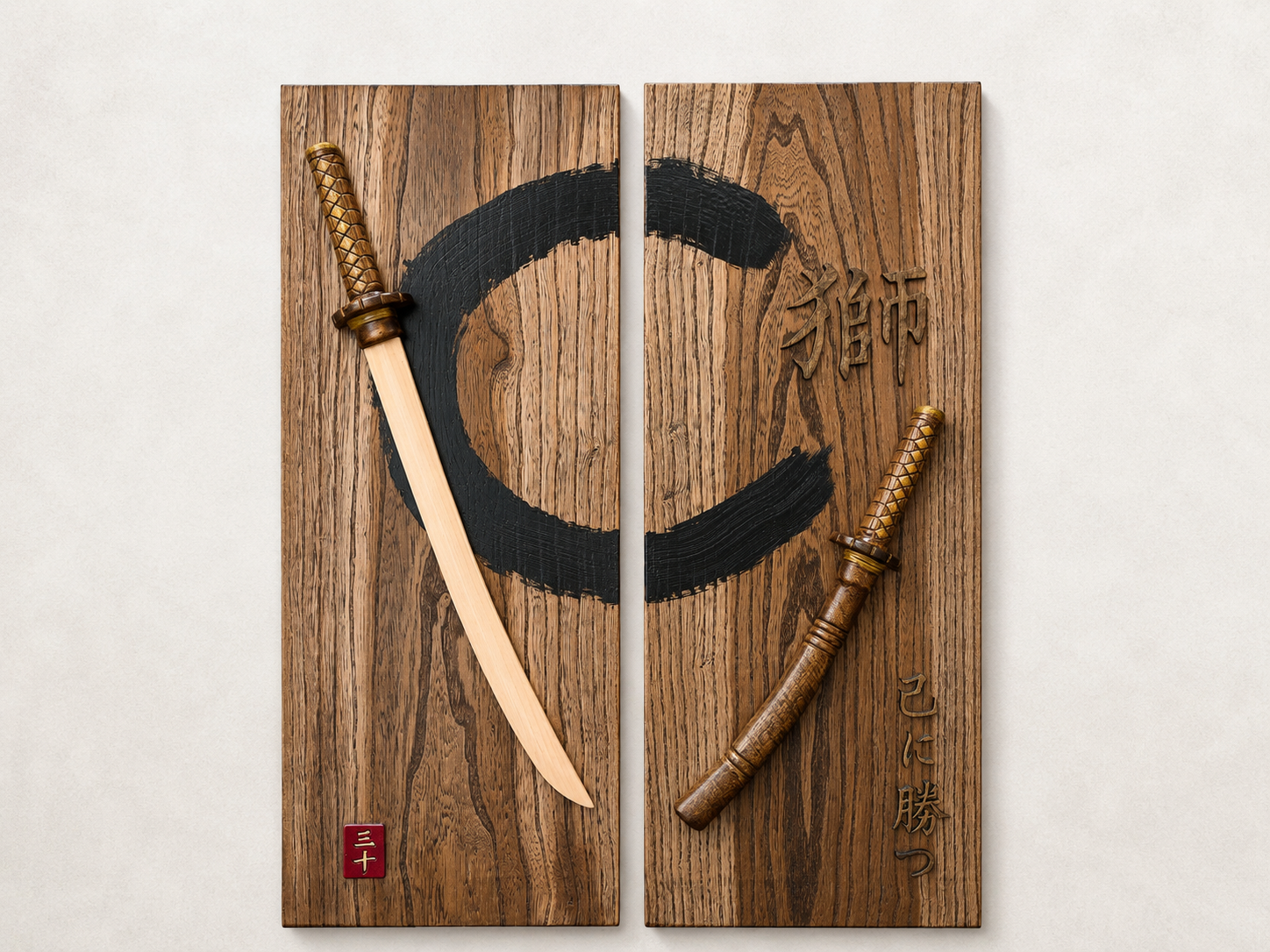
Before anything was permanently assembled, we laid every component onto the panels one last time.
This is a step we never rush.
Tiny adjustments.
A few millimeters here.
A slightly different angle there.
A little more breathing room.
Sometimes the smallest changes are the ones that create harmony.
Only when everything finally felt balanced did we begin the permanent assembly.
The Finished Artwork
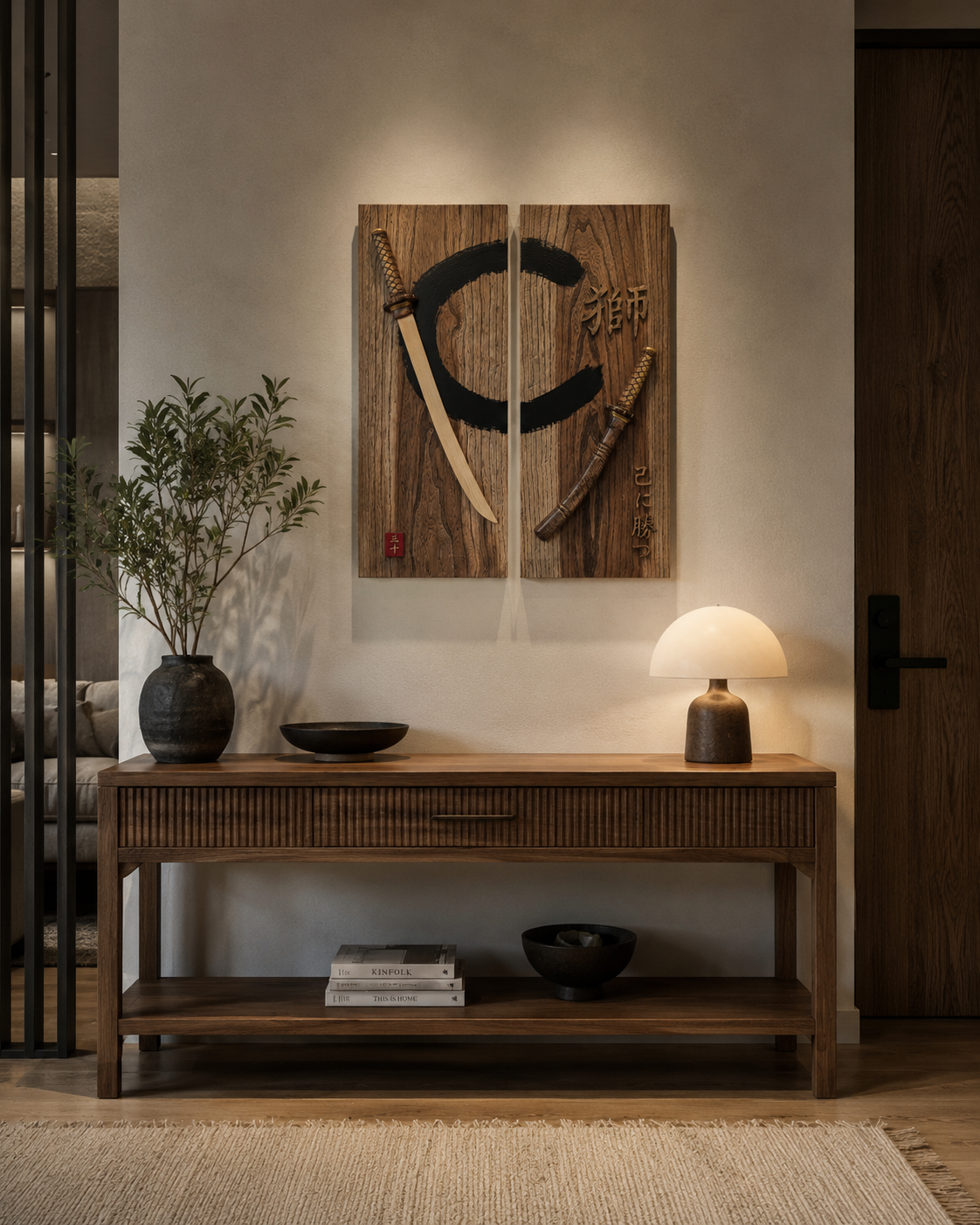
When people look at the finished piece, they often notice the swords first.
Or the Enso.
Or the kanji.
But for us, the artwork is about something less visible.
It is about The space between two swords.
The quiet balance between strength and restraint.
Between discipline and humility.
Between tradition and personal identity.
What began as a birthday gift became something much more personal.
A story told in wood.
And perhaps that is what bespoke craftsmanship is really about.
Not making something beautiful.
But making something that could only have been made for one particular person.